Ergonomics and Human Sexuality
“Faced with problems from bad knees and back pain to life-threatening illnesses, partners become collaborators, discovering creative solutions in the name of love,” writes Joan Price in Better Than I Ever Expected: Straight Talk About Sex After Sixty. “We explore new positions and props, such as wedge-shaped pillows that lift, tilt, and support.” She gets right to the essence of ergonomics and sex: modifying sex acts and the environment to match the physical demands of sexual activity to the participants’ physical abilities.

Ergonomics can mean making tools to make tasks easier on the body. An example is librarians opening DVD cases. Because many public libraries have large DVD collections, librarians often spend a lot of time each day checking that the returned DVD cases contain the proper DVD. The left image shows a biomechanically stressful way to do it. The stress can even be seen in the figure by noticing the tendon in the wrist bulging out against the skin as the box is gripped by the fingertips. Ingenious librarians developed a simple tool to reduce stress by cutting a paint-stirring stick into an opening tool (right image). The grips necessary on the box and tool are much less stressful on the hand than the technique shown on the left. This is an example of adapting the task of opening the DVD case to the person by introducing a tool. As an aside, the DVD shown is “Senior Sex.” It is an educational DVD that is mainly discussions and interviews with people that normalizes sexuality in older adults, but there are some explicit video clips. Thus, it probably is not available at your local library. If you are interested, it can be accessed online.
What is ergonomics?
Ergonomics is “fitting the task to the person.” There are many aspects of ergonomics, ranging from cognitive to physical and organizational. The kind of ergonomics most relevant to sex and aging biomechanics is physical ergonomics, which addresses designing or adapting tasks to meet the physical capabilities (strength, flexibility, aerobic fitness) as well as the physical dimensions of people. Ergonomics is often used in three ways: (1) prevent injuries in the workplace, (2) design consumer products, and (3) accommodate people with disabilities. The latter two are most directly relevant to the present discussion of sex and aging.
An example of an “ergonomic intervention” is the development of tools to reduce the stressfulness of a work task, thereby preventing injuries such as carpal tunnel syndrome. An example is librarians who have to open many DVD cases every day to ensure they contain the proper DVD when they are returned. The broad grip and type of grip used require large internal tendon forces, which can lead to cumulative trauma disorders of the hand and wrist. Librarians have created their own tools from paint-stirring sticks, which they get for free from a local hardware or paint store. The tool allows for the task to be done without the large hand span needed to grasp both edges of the DVD case. The case is opened by turning the tool in the slot on one edge of the case, which requires a low-stress power grip. In addition to reducing injury risk, this task modification increases the number of people who can perform the task. Librarians with small hands cannot grasp both edges of the case, but the new tool removes that requirement. Therefore, the task accommodates more people. Similarly, products have been developed to alter the physical demands of sex. They can reduce injury risk as well as reduce the physical demands of sex, allowing people with diminished physical capabilities to have sex.
Ergonomics is also commonly used in consumer product design. Suppose there was a sufficient market to support the development and sales of a special tool for the DVD box-opening task. Then a company would develop one. In addition to determining the materials, the designers would need to specify the handle size. How long should it be? How wide? How thick? Simple mechanics would influence these decisions due to the torque required to open the case. Physical ergonomics would also be used, as hand size determines the allowable dimensions of the tool handle. The measurement and quantification of body size and shape is called “anthropometry.”
I want to make a cautionary comment about the use and misuse of the term “ergonomics.” The term has also been co-opted by the marketing industry, turning it into a meaningless adjective slapped onto product advertising and packaging. Every time I turn around, I see something advertised as ergonomic that shows no signs of being designed with the user in mind. Examples range from office chairs to sex toys. Therefore, “buyer beware” applies when purchasing sex-related products that claim to be “ergonomic.”
The development of ergonomic interventions, whether developing tools or consumer products, begins with a thorough understanding of the task. What is the goal of the task? Who is expected to perform it? What are their capabilities? Interviews with employees, written job documentation, video recordings, checklists, and computer models can be used to answer these questions.
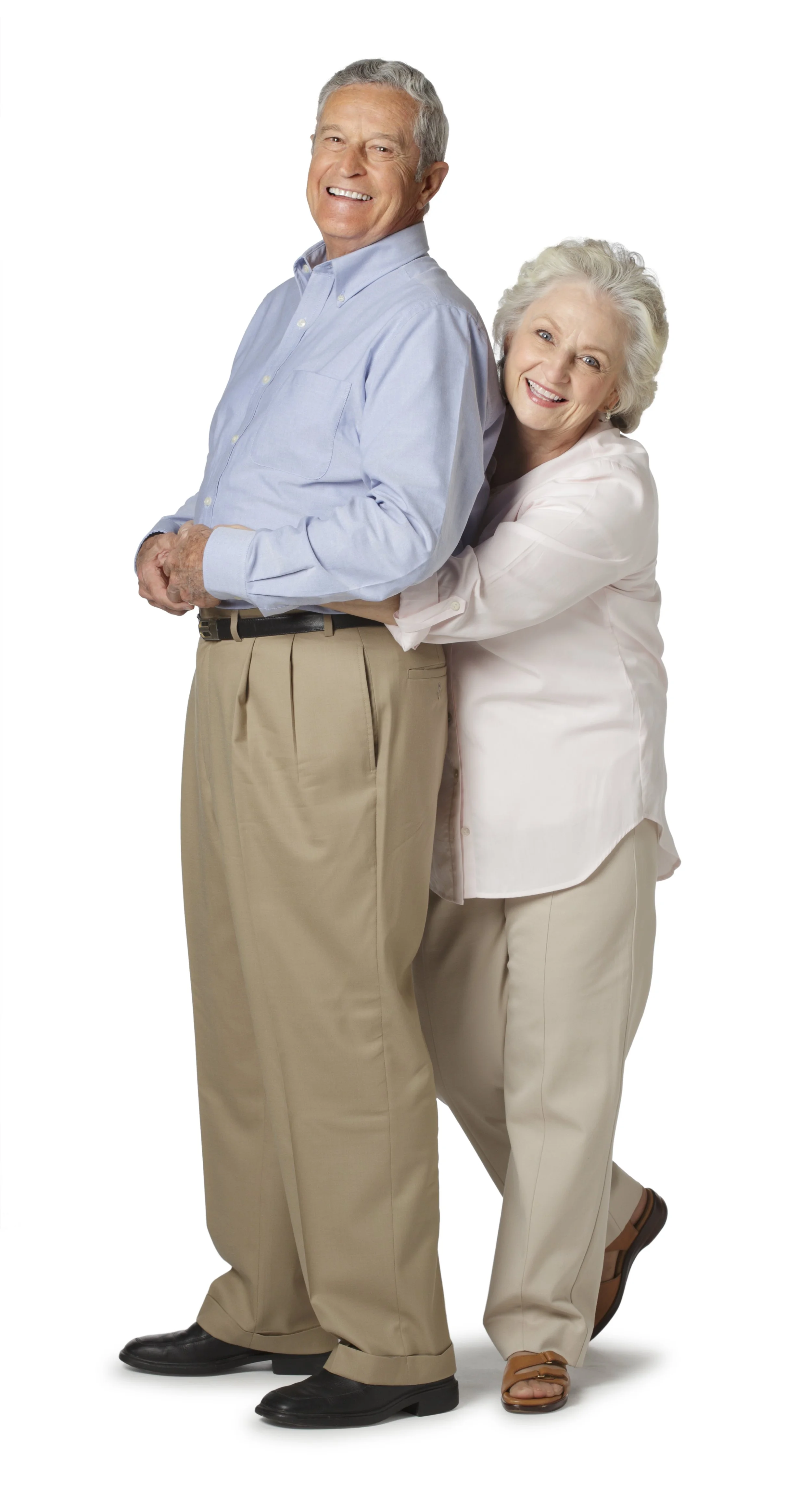
Sex partners often differ in height, which can make some sex positions difficult or impossible without modification.
How does ergonomics apply to sex?
The sexual equivalent of “fitting the job to the person” is modifying sex to meet the physical capabilities of the people involved. An example involves accommodating differences in partners’ height, which is a problem of applying anthropometry. Consider, for example, PIV sex. While the so-called “missionary position” can address this during penis-in-vagina (PIV) sex, many people also enjoy PIV sex while kneeling or standing. If the man is much taller than the woman, this can be difficult or even impossible. Supporting the woman’s pelvis with a wedge-shaped foam support can solve this problem.
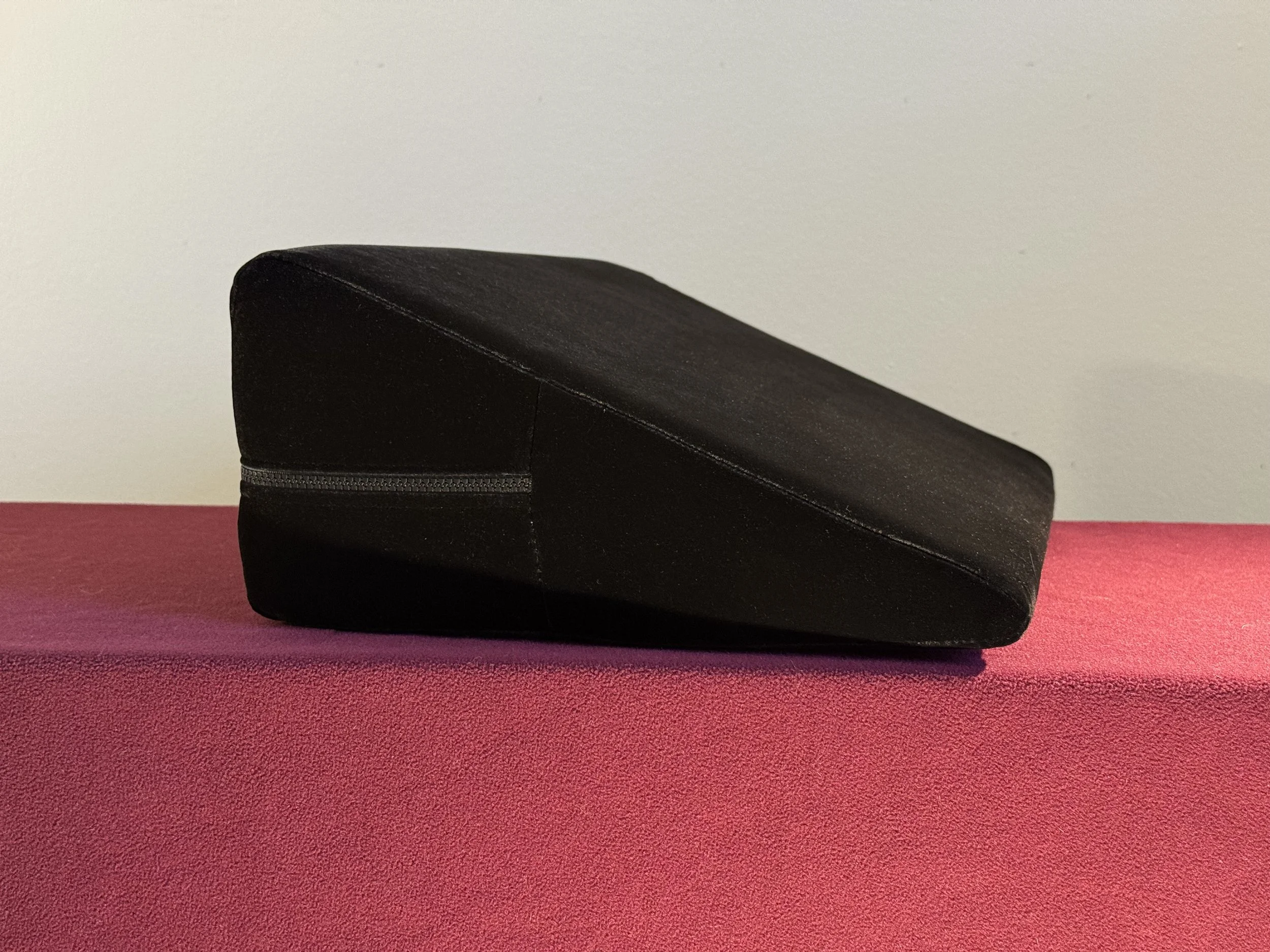
Wedge-shaped cushion can support the body during sex. It can help align body parts - such as the leg, low back, or pelvis - during sex. They are especially helpful when sex partners are substantially different in height. They are available in various shapes and sizes.
Sex wedges can be purchased at many local sex stores. However, wider selections are available online at places such as Liberator. It sells many products, ranging from sex pillows to sex furniture and sex toys. It offers a free “position guide” in PDF format that shows how its sex wedges and sex furniture can be used to modify sex positions or even introduce you to positions you had not considered before.
Another example of how ergonomics can be applied to sex is choosing sexual positions. Choosing sex positions to solve a problem is also an example of modifying the “task” of sex. The height mismatch problem can be solved by selecting a different sex position, such as the missionary position. Sex following total hip replacement is also an example of changing sex to meet the physical capabilities of the people involved. Because hip arthritis affects many older people, this problem is part of sex and aging biomechanics. Total hip replacement limits the range of hip postures that can be used without risking dislocation of the hip prosthesis. Consequently, sexual positions need to be carefully selected after surgery. Some positions that people enjoyed before surgery should be avoided afterward. A web page and PDF handout from the patient education committee of the American Association of Hip and Knee Surgeons illustrate high- and low-risk positions for dislocation. A company, Ergoerotics, has also made a wonderful video that demonstrates sex positions – and how to get in and out of them safely - that are suitable following hip and knee replacement surgery. Choosing a sexual position is a way of adapting the activity to “fit the task to the person” – or, in the case of partnered sex, to the people.

Reducing the physical demands of sex through an ergonomic intervention can prolong sex life as we age. The orange horizontal line represents the physical capacity required for sex. That capacity could be strength, flexibility, or stamina. This diagram is a “cartoon” that presents the concept rather than a specific representation of one-dimensional physical ability. The ergonomic intervention reduces the demands to the green line. This moves the age where sex stops from “end of sex with no intervention” to “end of sex with intervention.”
In the previous blog post, “biomechanics and human sexuality,” I described how exercise can be an effective intervention to extend our sex lives using a conceptual diagram. That diagram is revisited here to illustrate how ergonomic interventions can also be used to extend the age at which we are physically capable of having sex. Instead of decreasing the rate of change in physical ability, it assumes no modification of ability. Rather, an ergonomic intervention is used to reduce the physical demands of sex. Reducing the demands means that the physical capacity of the person falls below the demands at a higher age, thus prolonging the ability to have an active sex life. An example of such an ergonomic intervention would be a PIV sex position that required kneeling rather than a prone position of the person penetrating their partner, as that would reduce the energy expenditure.
A previous blog post briefly discussed lubrication, wear, and friction in sex as biomechanics. Lubrication is also an ergonomic issue. In industrial ergonomics, for comparison, proper maintenance and lubrication of equipment is often an ergonomic intervention to reduce force workers must produce to perform a task. Therefore, I place the use of artificial lubrication in the category of ergonomic intervention to address the need to control friction during sex. Friction can be good, as it helps stimulate nerves that cause arousal. However, it can also be quite negative by producing pain during penetrative sex. This can affect both men and women. A noteworthy aspect of aging sexuality is the reduction in vaginal lubrication following menopause, which can make PIV sex painful. Hormone therapy can help, but endocrinology is not the point of this blog – biomechanics is. Personal lubricant (“sex lube”) can be used, but it is important to understand the different types and appropriate uses for it (a future blog post will cover this topic because of its importance in sex and aging).
“Sex is so much more than just a penis in a vagina!” writes Laurie Betito, Ph.D., in The Sex Bible for People Over 50: The Complete Guide to Sexual Love for Mature Couples. “What if your penis isn’t hard enough for penetration? What if intercourse is painful because of small tears in your vagina caused by dryness? Do you just give up on sex? NO.” While Dr. Betito’s remark may seem pessimistic, it is also realistic. Sexual activity does not have to stop because of changes in our bodies (incidentally, both reasons PIV sex may end, as Dr. Betito mentions, are biomechanical). People have wonderful, fulfilling sex that is not PIV. Gay men and lesbians show this. It applies to straight people, too. Sex does not require a partner, as it can be “solo sex.” It can be oral sex or manual sex. It can be completely mental, consisting only of fantasy. All of these options for sex have different physical demands, and they can be selected to meet the needs of the participant(s).
Sex toys such as vibrators can also be used to modify the “task of sex” to meet the capabilities of the participants. The sensitivity of our tissues to mechanical stimuli such as pressure and rubbing declines with age. The sex acts we performed when we were younger may not provide the same sexual stimulation now. A vibrator can be used alone or with a partner. Again, Joan Price writes in The Ultimate Guide to Sex after 50 How to Maintain – or Regain – a Spicy, Satisfying Sex Life: “I admit it: vibrators are my best friends, sexually speaking. Without vibrators at my age (seventy as I write this), I’d rarely manage to have an orgasm – with or without a partner – and I really like orgasms. I know our experiences are vastly different – you may have easy orgasms and a toy-free way of getting there. But many of us would rarely enjoy one of life’s greatest pleasures if we couldn’t use our power tools.” Joan Price reveals a lot in this quote, as she attempts to normalize vibrator use for older people. There are many other kinds of sex toys beyond vibrators. She has a webinar on “sex toys for seniors” as well as relevant posts on her blog, such as “Vibrators for Seniors – especially for first-timers.”

Humans have a wide range of shapes and sizes. Hand tool design, for example, often uses anthropometric data for determining handgrip sizing. Many sex toys must also be designed to accommodate a wide range of hand dimensions.
Ergonomics is used in product design, including in sex products. Sex toys, for example, are analogous to the DVD box opening tool described above. The homemade DVD tool needed to be narrow enough to fit into the slot on the side of the case and the right size for the hand to grasp. On her blog post about vibrators, Joan Price writes: “We want ergonomic design. Arthritic wrists and hands are common. It hurts when we must bend or twist our wrist to hold a toy in position. We like strong vibrations on our genitals but not pulsing through our hands. The best designed vibrators let us concentrate on our pleasure without worrying how long our wrists can hold out.” Thus, ergonomic design principles should be used in designing vibrators. Similarly, some toys need to be sized to fit into the desired human orifice. It also needs to be suitably-sized for a person to hold in the hand or fit into a harness. The designer needs anthropometric data to determine the product shape and size.
Just as anthropometry is used to design office furniture, it can be used to design sex furniture. Sex furniture is larger than sex wedges, but may be a set of connected wedges that fold into shapes that can support more of the body. As with any furniture, sex furniture needs to be designed with human body dimensions in mind. This type of furniture can provide bodily support for older adults – especially those with chronic conditions like arthritis - so they can have sex comfortably.

What does sex mean to you and your partner? Examining how important each aspect of sex (emotional intimacy, physical intimacy, sexual pleasure, etc.) is to you and your partner is the foundation of ergonomics in human sexuality.
What does “sex” mean to you?
Just as in industrial ergonomics, applying ergonomics to sex and aging should begin with a task analysis. However, it is a very different kind of task analysis. Joan Price, the author of many books on sex and aging, suggests considering what the “meaning” of sex is in your life. Figuring out what the physical, emotional, and relational meaning of sex is for you and your partner is the foundation of an ergonomic task analysis of sex. When younger, it might not have been necessary to carefully consider all the different aspects of sexuality. One could jump into bed with a partner and get all the benefits of sex without analyzing it. As we age and our physical abilities change, sex may not be so simple. If a man loses the ability to achieve an erection, does that mean the end of sexuality for him? If he has a partner, does it mean the end of sex for them? That is true only if one conceptualizes human sexuality in a very limited way, such as “sex” meaning only PIV sex. If the meaning of sex goes beyond getting pregnant, for example, then oral sex remains an option. If the meaning of sex for the couple includes emotional intimacy, then conversation and cuddling remain options for meeting the needs that had previously been met by penetrative sex. Thus, the search for ergonomics interventions in human sexuality should begin by answering questions such as:
· What has the word “sex” meant to my partner and me in the past, and how might that limit us in the future as our physical abilities change?
· How has sex met our needs for emotional intimacy?
· How important is having an orgasm to my partner and me?
· How important is touch and caress to my partner and me, even when it doesn’t lead to sexual arousal or orgasm?
Once these larger questions have been considered, a more traditional ergonomic task analysis can be performed. Unfortunately, there is only a little published data on the physical demands of sex. Moreover, there are substantial privacy and ethical issues associated with using traditional ergonomic evaluation tools, such as video recording. Consequently, the best method for understanding the physical demands of sex is likely self-assessment. What is uncomfortable? What body part (knee, hip, lower back) gets tired first?
What does this all mean for you?
Once you and your partner – if you have one – know what “sex” means to you and how you want it to fit into your lives, you can address how to engage in “sexual ergonomics” as you age. The ergonomic solutions may involve changing how you have sex, from changing sex positions in partnered penetrative sex to moving to solo sex or mutual masturbation. Using pillows and other supports can also help accommodate different body shapes and sizes. Moreover, they may be useful in minimizing discomfort arising from physical impairments older people often have, such as arthritis and low back pain.